Why Does My Child Need Diverse Books?
If you’ve ever stood in a bookstore aisle wondering why your child’s shelf looks nothing like the world they live in, you’re not alone. Parents across the country are asking the same question: why does representation in children’s literature actually matter?
The research is clear. Children who see themselves reflected in stories develop stronger self-esteem, richer vocabulary around identity, and greater empathy for others. Psychologists call this the “mirrors and windows” effect — books that act as mirrors help children see their own worth, while books that act as windows help them understand people different from themselves. Every child needs both.
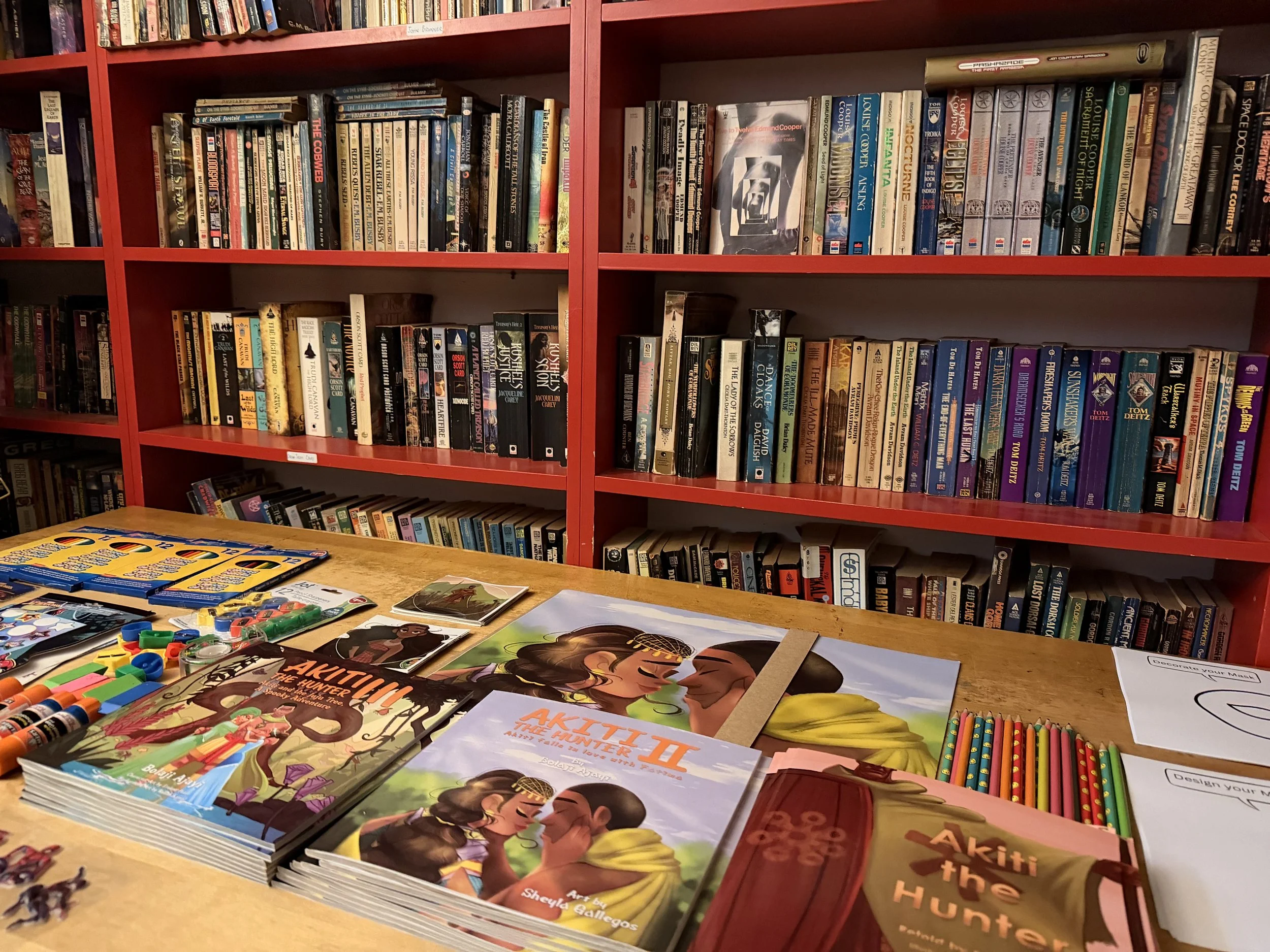
This is exactly the gap that Akiti the Hunter was created to fill. Written by award-winning author Denise Mobolaji Ajayi Williams (also known as Bolaji Ajayi), the series introduces what has been described as the first African superhero in U.S. children’s literature. Akiti isn’t a side character or a token nod to diversity — he is the hero, the center of his own mythology, drawn directly from Yoruba tradition and Afrofuturist storytelling.
Ajayi Williams brings a rare depth of credibility to this work. Beyond her writing, she has been recognized internationally, including as an Eminent Peace Ambassador and Global Diplomat, and her career spans business, diplomacy, and cultural advocacy across Africa and the U.S. That global perspective shows up on every page of Akiti’s world — it isn’t diversity as decoration, it’s diversity as lived experience.
For parents specifically searching for diverse books, here’s what to look for, and what Akiti the Hunter delivers:
• Authentic cultural roots, not generic “multicultural” branding
• A hero of color as the protagonist, not a supporting role
• Storytelling that respects the source culture — in this case, Yoruba mythology and jùjú musical tradition, woven in with care rather than borrowed for aesthetic
• Universal themes — courage, identity, family, purpose — that resonate with any child, while still centering a specific cultural lens
Diverse books also do something quieter but just as important: they normalize difference for every child who reads them, not just the ones who see themselves reflected. A child who grows up reading about Akiti’s world develops a wider, more generous imagination about who gets to be a hero.
If you’re building a home library — or a classroom shelf — that actually reflects the world your children will grow up in, Akiti the Hunter is a strong place to start. It’s not just representation for representation’s sake; it’s a fully realized mythology, built by someone with the cultural authority and storytelling craft to do it justice.
Explore the Akiti the Hunter series and see why families and educators are calling it a landmark addition to diverse children’s literature.