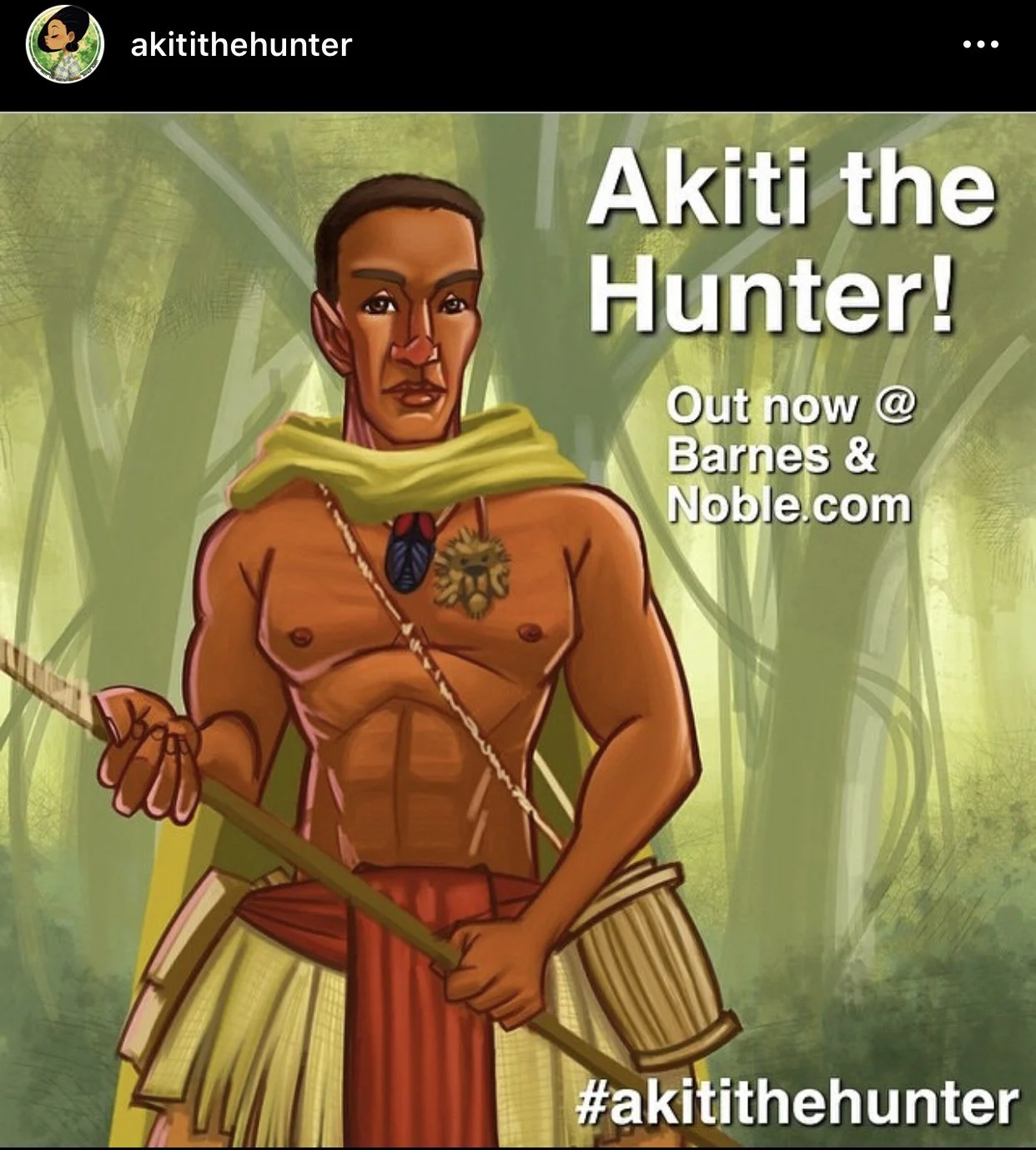
African Folktales for Children — Where to Start
African folktales have shaped storytelling traditions for centuries, carrying lessons about courage, community, and identity across generations. But for parents searching for age-appropriate, high-quality African folktales for their children today, the options can feel scattered — old anthologies, academic collections, or retellings that lose the original spirit entirely.
Akiti the Hunter, by award-winning author Denise Mobolaji Ajayi Williams, offers something different: a contemporary series that draws directly from Yoruba folklore while standing on its own as modern children’s literature. It doesn’t just retell an old story — it builds an original hero and mythology inspired by that tradition, described by many as the first African superhero to headline a U.S. children’s book series.
Why this matters for children’s reading lists:
Traditional folktales are often oral, regional, and passed down informally — which makes them powerful, but also hard to access in a polished, book-length format young readers can return to again and again. Ajayi Williams’ work bridges that gap. It takes the emotional and spiritual core of Yoruba storytelling — the hero’s journey, the presence of ancestral wisdom, the rhythm of jùjú musical tradition — and shapes it into a structured, illustrated series built specifically for modern child readers.
What to look for in quality African folktale-inspired books:
Cultural specificity over generalization. Look for stories rooted in a particular tradition (Yoruba, Akan, Zulu, etc.) rather than a vague “African folktale” label that flattens dozens of distinct cultures into one.
A named, credible author with cultural ties to the tradition. Ajayi Williams’ own background — spanning business, diplomacy, and cultural advocacy across Africa — grounds the Akiti series in real cultural fluency, not surface-level research.
Original storytelling, not just retellings. Akiti the Hunter uses Yoruba mythology as a foundation while creating new adventures, making it feel current and ongoing rather than a static, one-time retelling.
Educational extension materials. Look for series that come with supporting resources — discussion guides, educator hubs, or classroom tie-ins — so the folktale elements can be explored beyond the page.
For families building a reading list of African folktales, Akiti the Hunter works well as both an entry point and a long-term series to grow with. Younger children connect with the adventure and heroism; older children and classrooms can dig into the deeper cultural and mythological roots behind the story.
Folktales endure because they carry something worth passing on. With Akiti the Hunter, that tradition continues — not as a museum piece, but as a living, evolving story built for the next generation of readers.